Basset Hound Welfare
The kindest thing you can do for a Basset Hound is deliver great welfare.

Section 1: The Basset Basics: Understanding the "House-Hippo"
Basset Hounds are basically ground-level works of art, but that gorgeous, low-slung structure, those floppy ears, and those mournful eyes come with a VIP care manual! Truly understanding their unique anatomy is the first step to being an incredible Basset owner.
1. The Droopy Wonders: Scent-Sweepers and Infection Traps!
-
The Ears: Those long, velvety ears are brilliant scent tools, designed to sweep odours right up to their massive nose. Unfortunately, they also act as perfect insulators, trapping moisture, heat, and dirt like nobody's business, making them hotbeds for infection.
-
The Expert Tip: You need to become a certified Ear Inspector! A quick daily wipe and a deep weekly cleaning (with vet-approved solution) is non-negotiable. If you skip this, you’ll quickly learn the distinct, pungent smell of an angry Basset ear. Trust us, it’s a smell you won't forget!
-
-
The Eyes: The Eternal Sad Face (and the Maintenance!) The Basset’s trademark saggy skin means their lower eyelids often droop. This exposure can make them prone to dryness, irritation, and conditions like cherry eye.
-
The Expert Tip: Keep the area around their eyes clean and dry to prevent tear staining. Any excessive redness, discharge, or squinting means it’s time for a vet visit.
-
2. The Long and Short of It: Spine and Joints
This is the most critical physical care area. Bassets are built like little furry suspension bridges, and we need to treat them that way!
-
Ramps Over Leaps!: Allowing a Basset to repeatedly jump off high furniture puts tremendous strain on their long spine and short legs. This accelerates arthritis and increases the risk of Intervertebral Disc Disease (IVDD).
-
The Expert Tip: Invest in ramps! We know they can jump up, but you must prevent them from jarring their spines by crashing down. Think safety, not Basset-ballistics!
-
3. The Scent Drive: Their Nose is the Warden
A Basset Hound's nose is their entire world, it’s believed to have 220 million scent receptors! You are a secondary consideration when a good trail is on the air.
-
The Great Escape Artist: If a Basset catches a compelling scent, they become deaf to your calls and laser-focused on the track. They will follow that nose anywhere, making them notorious escape artists.
-
The Expert Tip: Your yard must be secure (they can tunnel!). NEVER trust their recall in an unfenced area. A reliable harness and a strong leash are your only defence.
-
Section 2: Health & Maintenance: More Than Just a Cute Face
A healthy Basset is about proactive care that prevents major issues down the road. This breed has a few specific health vulnerabilities every owner must be aware of.
1. The Battle of the Bulge: Where Less is Always More
The Basset’s plea for snacks is legendary, but those short legs and long back are absolutely NOT designed to carry extra weight. Obesity is the single biggest threat to their quality of life.
-
The Problem: Extra weight crushes their already vulnerable spine and joints, rapidly accelerating arthritis. A "chunky" Basset is not a healthy Basset.
-
The Expert Tip: You should be able to feel their ribs easily (like running your hand over the knuckles of a loosely closed fist). Talk to your vet about a precise diet, measure their food strictly, and consider using a slow feeder bowl to make mealtime last a bit longer!
2. Dental Drama: The Silent Health Killer
It's easy to overlook, but dental disease in Basset Hounds is common and can lead to major heart and kidney issues if left untreated.
-
The Problem: They are prone to excessive plaque and tartar build-up. Bad breath is more than an inconvenience; it’s a sign of infection!
-
The Expert Tip: Brushing their teeth daily might sound wild, but it’s the gold standard! At a minimum, aim for three times a week. A sparkling Basset smile is a healthy Basset!
3. Bloat (GDV) Awareness: The Life-Threatening Race
This is the most serious, time-critical issue. Bloat, or GDV, is when the stomach twists. It is an emergency where every minute counts.
-
The Symptoms (Know Them!): If you see your Basset attempting to vomit without success, pacing, or drooling like they just won a lottery ticket made of bacon, consider it an immediate code red.
-
The Expert Tip: If you suspect Bloat, go to the vet immediately, do not wait to call! To help prevent it, feed two or three small meals a day and enforce a strict 30-minute rest period before and after eating.
4. The Short-Haired Surprise: A Constant Snowfall
-
Don't let that sleek, short coat fool you! Basset Hounds are, in fact, incredibly dedicated shedders. While they are low-maintenance when it comes to professional trims, they are high-maintenance when it comes to loose hair. They shed consistently year-round, leaving a fine layer of Basset glitter on your floor, furniture, and clothing.
-
The Seasonal Avalanche: In the spring, when they "blow their coat" to adjust for warmer weather, the shedding ramps up to an alarming degree. You are right, it feels like you could brush enough hair off to assemble an entire second Basset Hound!
-
The Expert Tip: Acceptance is step one! Step two is aggressive, routine brushing, at least 2-3 times a week, and ideally daily during the spring and autumn. Invest in a good brush or de-shedding tool designed for short coats. (visit our shop from the menu for recommended tools). Regular brushing is the only way to minimise the amount of furry devotion your Basset leaves around the house!


Section 3: The Basset Lifestyle: Training & Temperament
While they are often called "mellow," Bassets are hounds with a deep-seated working heritage. Understanding their mindset is key!
1. Training (The Basset Way): Selective Listening
Bassets are intelligent, yes, but they are also driven by their own motivations, primarily sniffing, eating, and then maybe listening to you.
-
The T-Rex Puppy Phase: Remember that cute puppy image! Their stubbornness, curiosity, and sheer chewing power during the first years can feel like raising a miniature dinosaur! They will test boundaries constantly.
-
The Expert Tip: Bassets are famous for their selective hearing, they only hear the word "treat." Use high-value, stinky treats (sausage bits, cheese crumb nibbles!) for positive reinforcement. Keep sessions short and fun. If they're being stubborn, they’re not defying you, they're simply on "Hound Time." Patience is your superhero power here!
2. Socialization and Companionship: The Pack Animal
Bassets are deeply social dogs. They are tolerant and loving, but their need for companionship is intense.
-
The Big Problem: Separation Anxiety. Left alone for long periods, Bassets can become stressed, destructive, and LOUD (that bay can carry for miles!).
-
The Expert Tip: If you work full-time, you must plan ahead! Consider a dog walker or doggy day-care. Bassets need you (or a proxy) to avoid becoming lonely and destructive.
3. Exercise (The Right Kind): Sniffing is a Sport
While they look like furry couch potatoes, Bassets need daily exercise. It just has to be the right kind that respects their joints and satisfies their hunter's drive.
-
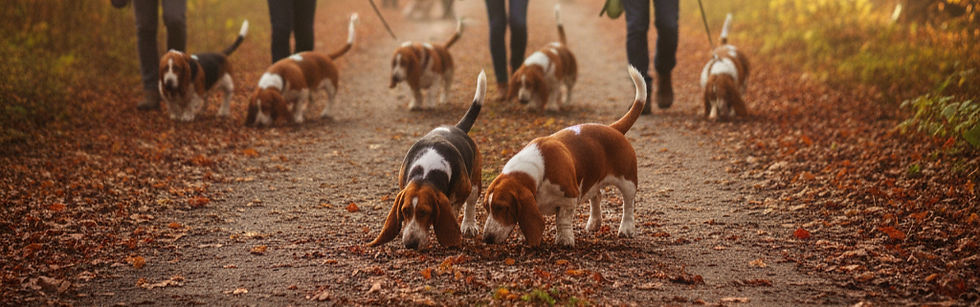
The Expert Tip: Treat a walk like a "Sniffari"! Allow them to stop, explore, and utilize that incredible nose. 30-60 minutes of quality sniffing time is often more mentally tiring (and rewarding!) than a short, fast jog. It is recommended by many that Basset Hounds should only get 5 mins of exercise per month of their age. For example: 8 weeks / 2 months = 10 mins per day. due to their predisposition of their back and joints. There is some evidence to suggest too much exercise may cause irreparable damage. While your Basset Hound may have the energy of an athlete initially, most of that energy should be channelled into a 'Sniffari', so a 30 to 60 mins outing consists of about 10 mins actual walking, and the rest sniffing and investigating to keep that growing brain happy!
4. The Slobber Factor: Life with a Basset
This isn't really a health or training point, but it's a daily reality! Basset Hounds are champions of drool, particularly around mealtime or when they're anticipating a treat (or sometimes just because).
-
The Expert Tip: Embrace the drool! Keep 'slobber rags' (see our 'Drool Defence System' in our product listings) strategically placed around your home. If you own a Basset, you will quickly become an expert in spotting and wiping the tell-tale 'slobber strings' before they reach the floor. A little extra cleaning is a small price to pay for this much charm!

Section 4: Rescue & Responsible Sourcing: Finding Your Low-Rider Responsibly
While this section is the last section, it's actually 'THE' most important section, because the health and longevity, and temperament of your puppy pretty much relies on where you source it. So, if you're still on board, the next step is finding your companion in an ethical, responsible way!
1. Adopt, Don't Shop (The Basset Rescue Way!)
Because of their unique needs, many Bassets unfortunately end up in rescue. Adopting from a breed-specific rescue is incredibly rewarding!
-
Why Rescue Rocks:
-
Instant Experts: Rescue organisations are run by people who live and breathe Bassets. They can tell you about a dog’s specific quirks and needs better than anyone.
-
Saving a Life: You’re giving a deserving hound a second chance at a comfy sofa!
-
2. What to Look for in a Responsible Breeder:
If a puppy is the right route, you must ensure you are supporting an ethical program and not a puppy mill.
-
Green Flags (What a Good Breeder Does):
-
Health Testing & Transparency: They will provide proof of genetic health clearances on both parents (including hips, elbows, and eyes, specific to the breed). They should be completely open about the breed’s health challenges.
-
The "Interview": They should ask you as many detailed, probing questions about your lifestyle and home as you ask them! This proves they care where their puppies end up.
-
Open House: You are encouraged to visit their home/facility and meet the mother of the puppies. Never buy a puppy from someone who insists on meeting you in a neutral location (like a service station or car park).
-
Lifetime Support: A responsible breeder will take the dog back at any point in its life if you can no longer care for it.
-
-
Red Flags (Run the Other Way!):
-
Multiple Breeds: Breeders offering a "variety" of purebred or designer dogs are likely operating a puppy mill.
-
No Paperwork: A lack of health testing, vaccination records, or registration is a huge red flag.
-
The "Parking Lot Hand-off": Never buy a puppy from someone who insists on meeting you in a neutral location.
-
The "First Come, First Served" Mentality: Responsible breeders prioritise the right fit over the quickest sale.
-
No Support: Once the sale has gone through, there is no support at any point thereafter.
-